Iris Chang was the woman who would not forget the Nanjing Massacre.
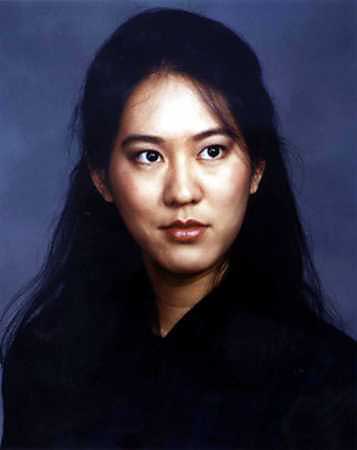
I’ve been seeking to learn more about modern(ish) Chinese history, and so I read Iris Chang’s The Rape of Nanking this summer. The book bears witness to one of the worst episodes of human cruelty in the twentieth century, known either as the Nanjing Massacre or Rape of Nanking. It’s a chilling warning to us about how people can hate others so deeply as to inflict unthinkable, senseless misery and destruction. How mob mentality turns people (usually men) into agents of evil.
Iris Chang could not forget this war crime and so many of us cannot forget Iris Chang. She was an extraordinary person — she published her first book before her 25th birthday and she wrote The Rape of Nanking before 30. She had a rare combination of brilliance, compassion, moral integrity, and dogged persistence. Unfortunately, Iris’ life was cut short when she fell into depression and committed suicide at age 36.
Why Iris resonates with me.
I was profoundly moved after reading The Woman Who Could Not Forget, a memoir about Iris’ life that’s penned by her mom, Ling Ling. Iris’ journey churned in my head for days, after I turned the last page. Iris was one of those really really few people who are quirky like me — and that makes me sadder that she is gone.
What was it about her that resonates? Maybe it’s that we’re both midwesterners. Maybe it’s that we’re both products of immigrant, intellectual families (mine being Jewish, hers being Chinese). Maybe it’s that we’re both movie buffs and read piles of books until we go short-sighted. Maybe it’s that we’re quiet amongst strangers, and talkative and opinionated beyond all recognition amongst those closest to us.
But there’s more that goes deeper. Iris was fiercely independent and worked best outside of traditional organizations, like national news companies. She was sharp as a tack, creative, and cared most about the big picture — not getting all minutiae exactly right. She was driven by a sense of justice, but she was too much of an independent thinker to be Politically Correct (i.e. woke), or care about the latest pop-liberal cause.
Iris believed free societies can only survive if there’s some people in the critical minority, rather than the unquestioning majority. It’s lonely and unpopular questioning the mainstream. But it’s how people like Iris Chang change the world. She was my kind of person—a freethinker in the critical minority, who never fully fit in anywhere.
Iris’s peers bullied her for being different. Her preppy sorority sisters called her “Changling” behind her back. Her straight-A high school classmates stopped her from joining the computer club because she was a girl. And so she would sparkle brightly outside of academe and tech, as a journalist and writer.
How Iris changed our world.
Before Iris wrote The Rape of Nanking, few people outside East Asia knew of the scale of war crimes committed by the Japanese military during WWII. Most assumed the Japanese were gentler than the Nazis. But Iris would not let the world forget that it was the Japanese who committed the first massive war crime of WWII, years before Auschwitz-Birkenau was built.
Iris would not forget the Nanjing Massacre — in which Japanese soldiers marched into China’s capital, murdered hundreds of thousands of unarmed people, and raped tens of thousands of women, and girls. Iris did not just present meticulous research that proved the scale and culpability of the Japanese army’s crimes. She voiced the pain and terror of this dark moment in history in a way that compelled our collective conscience.
The publishing of Iris’ book ignited criticism and controversy. Many Japanese hardliners nit-picked specifics in the book, attempting to discredit it with the minor errors of a young, non-academic writer. But the dye was already cast, the world remembered once again the Nanjing Massacre.
Iris changed the world again when she wrote her last book, The Chinese in America. She wove together a cohesive narrative covering the over 150 years of Chinese people living in America. She tought us about how social and economic events in China and America shaped the Chinese-American community of today. She popularized a counter-narrative that debunked the Model Minority Myth. She offered hard lessons about xenophobia, violence, and racism. And she did it all in barely 300 pages.
I think The Chinese in America was every bit as brilliant as The Rape of Nanking. It put on display Iris’ knack for immersing herself in her topic and serving out pearls of wisdom to us. Much of that wisdom turned out to be prescient, in anticipating the divisiveness and violence of the Trump Era. Her voice is sorely missed.

How Iris could not bear to live longer.
Why did Iris commit suicide? Many theories abound —- that she suffered from years of undiagnosed mental illness; that she was haunted by visions of the horrors she wrote about; that she was plagued by accusations over historical inaccuracies in The Rape of Nanking, that she was increasingly paranoid about being stalked and sabotaged; that she really was being targeted by Japanese or American agents; that she was despondent about Bush’s election during the week before her suicide; that she was stressed about parenting her son; and that she was misdiagnosed and forced to take medication that had serious suicidal side-effects.
My take is that Iris was an example of the fine line between brilliance and insanity. She teetered on this line, surrounded by a society that is unkind to people who think differently. At some point, there were too many stressors that pushed Iris into a dark mental space that she couldn’t escape. In Iris’ own words—
When you believe you have a future, you think in terms of generations and years. When you do not, you live not just by the day — but by the minute. It is far better that you remember me as I was — in my heyday as a best-selling author … Each breath is becoming difficult for me to take — the anxiety can be compared to drowning in an open sea.
Iris wrote for generations. My hope is that we and future generations continue to learn from the wisdom that she so generously left us.
Learn more about Iris. A small, diverse community has been drawn to the topic of Iris Chang, and they have written extensively about her life and legacy —
- Chang (Iris) Papers. This archive has hundreds of documents, recordings, and memorabilia from Iris’ life and career.
- The Woman Who Could Not Forget. Ying Ying, Iris’ mom, wrote this memoir about her departed daughter. This tells a hard-to-forget story about the daughter, mother, author, and activist that was Iris Chang. You are left with a strong sense of how Iris was adored, and even revered, by those who loved her.
- On the Trail of Iris Chang. Lisa Yin Zhang tells us what Iris means to her, as a gen-Z, Chinese-speaking, Asian American who grew up in a world that had been transformed by Rape of Nanking and Chinese in America. Like Iris, Lisa is a talented storyteller, and an ascendant creative force.
- Iris Chang One Year Later. Another fan of Iris recounts her life and death. This blog is from the 2000s, and it’s a glimpse at the widespread shock and grief at the loss of Irish Chang. You can hear from Iris herself in a curated collection of interviews, speeches, and articles.


One response to “November 2022: Remembering Iris”
[…] Beyond the Rape of Nanking (Chang, Ling Ling, 2011) — This poignant memoir recalls the life of Iris Chang, the extraordinary researcher and author who wrote the Rape of Nanking about Japanese atrocities in […]
LikeLike